How Vendors Deliver Invoices in 2026: 101 Billing Portals, Coded
We coded 101 vendor billing portals on four questions about invoice delivery, then checked what regulators expect of the same invoices. Method and sources included.

Reviewed by Dmitry Suv, Founder & Engineer · 2026-09-19
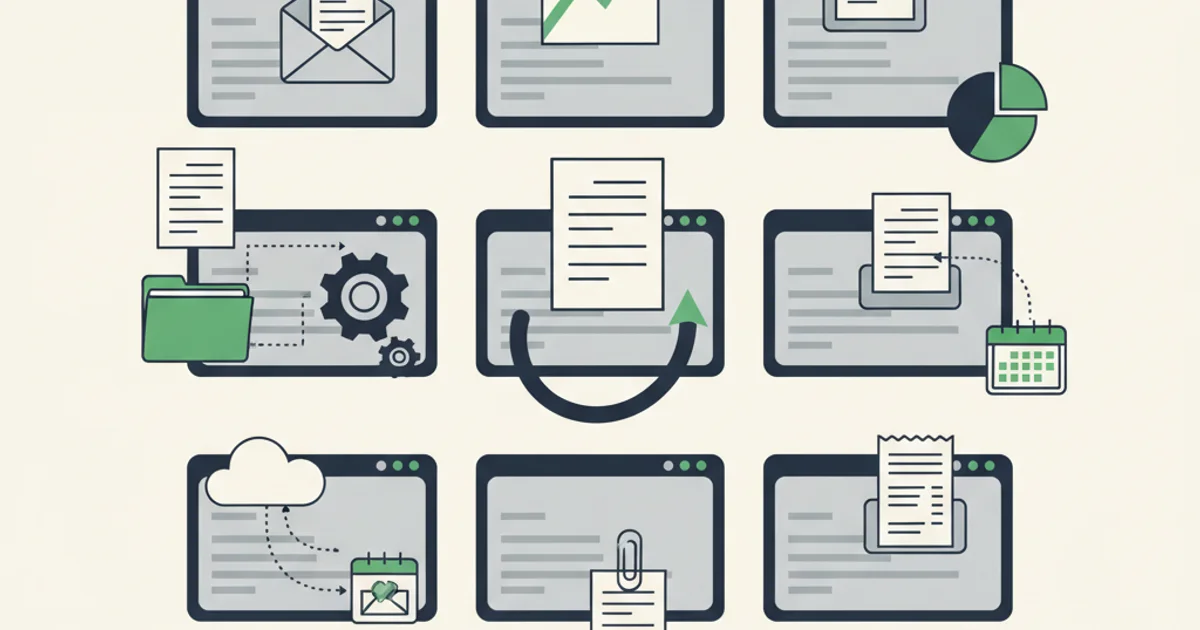
Most writing about accounts payable starts after the invoice is already in the accounting system. We wanted the step before that: how the invoice gets out of the vendor in the first place. So we coded 101 vendor billing portals on four questions, and the answer is narrower than we expected. 97 of 101 offer no way to download every invoice at once. 101 of 101 make you log in first. 65 of 101 email the invoice without being asked, and 25 of 101 never email it at all. The invoice supply chain is one login and one click per document, almost everywhere.
What we found across 101 vendor billing portals
We took the 101 vendor billing pages we maintain at our vendor invoice hub, read each vendor's own billing documentation, and coded four yes-or-no questions per portal. Every coded value carries the sentence it was read from. Nothing was inferred from how a portal "probably" works.
| Question | Yes | No | Unclear |
|---|---|---|---|
| Can you download every invoice at once? | three | 97 of 101 | one |
| Do you have to log in to get the invoice? | 101 of 101 | none | none |
| Does the vendor email the invoice unasked? | 65 of 101 | 25 of 101 | 11 of 101 |
| Is there a separate tax invoice? | 16 of 101 | 56 of 101 | 29 of 101 |
Four findings stand out.
Bulk download barely exists. 96% of the portals we coded have no way to get a full set of invoice PDFs in one action. The exceptions are FedEx, Google Cloud and Packlink, and even those are a multi-select in a list rather than an API. Some portals offer a CSV export and it reads like a bulk download until you open it: Stripe and Google Ads both hand you a summary table with no PDFs attached. AWS states it plainly, one at a time from the console.
The login is the single point of failure. Every portal in the sample requires one. That login usually sits with one person, which means the invoice is reachable exactly as long as that person's account is. Nothing about this is malicious, it is just how self-serve billing was built, and it is why a leaver quietly takes a year of invoices with them.
Email is the real distribution channel, for just under two thirds of vendors. 65 of 101 send the PDF to the billing contact when it is issued. That is the copy most finance teams actually work from. But 25 of 101 send nothing, so for a quarter of your vendors the invoice exists only behind the login, and no one is reminded it is there.
The tax document is often a second document. 16 of 101 issue a separate VAT or GST invoice alongside the payment receipt, frequently in a different part of the portal and sometimes only on request. If your process captures the receipt and stops, that is the document you are missing at audit.
Where the invoice rules are heading
The numbers above describe unstructured delivery: a PDF, behind a login or in an inbox. Regulators are pushing in a different direction, and the gap between the two is the reason this dataset exists.
The European Commission expects the move to e-invoicing to cut VAT fraud by up to €11 billion a year and EU traders' administrative and compliance costs by over €4.1 billion a year, with the VAT gap it is aimed at estimated at EUR 93 billion in the EU in 2020. Structured e-invoicing with near real-time digital reporting becomes mandatory for cross-border trade inside the EU from 1 July 2030. Public bodies got there first: the EU's e-invoicing directive for public procurement set April 2020 as the deadline for all public authorities to receive and process standard-compliant electronic invoices, and the Commission now publishes country factsheets covering all 27 EU countries plus four EEA countries.
The same shift is running outside Europe. Australia's tax office reports over 400,000 Australian businesses on the Peppol network, part of more than 3.5 million businesses across more than 100 countries, with over 50 countries represented in openPeppol's membership. Singapore is phasing its GST InvoiceNow requirement in from Apr 2028 to Apr 2031, which it expects to bring about 90,000 more businesses onto that network.
None of this reaches the vendors in our sample yet. A software subscription billed to a company card is a domestic B2B transaction settled by PDF, and it will stay that way through every deadline above. Two channels are going to run in parallel for years, and the PDF one is still the larger of the two for most buyers.
How long you have to keep what you downloaded
The retention clock is the part that makes single-click downloads expensive later.
HMRC requires that you must keep VAT records for at least 6 years. In the United States the IRS sets the general period at 3 years, extends it to six years where income is under-reported by more than 25% of gross income, and asks for employment tax records to be held at least 4 years after the tax becomes due or is paid.
Set that against the portals. Vendors do not commit to keeping an invoice reachable for six years, several trim billing history when a subscription is cancelled, and the account holding the login may not exist by then. The retention obligation is yours, the storage is theirs, and nothing lines the two up for you.
What starts when the invoice arrives
Delivery is also when the payment clock starts, and the EU has put hard numbers on it. Public authorities have to pay for goods and services they procure within 30 days, enterprises have to pay their invoices within 60 days unless they expressly agree otherwise, and late payment carries statutory interest of at least 8% above the European Central Bank's reference rate. The Commission's payment observatory attributes one out of four bankruptcies in the European Union to late payments.
An invoice sitting unread behind a vendor login is not a filing problem, it is a clock that started without anyone watching it. That is the practical case for pulling invoices into one place as they are issued rather than at month end, which is the work our accounts payable process guide and our invoice processing automation overview go into.
Methodology
What the dataset is. 101 vendor billing portals, each coded on four questions:
bulkDownload (can a customer download every invoice at once), loginRequired (must a
customer sign in to get the invoice), emailedByDefault (does the vendor email the PDF
unasked) and separateTaxInvoice (does the vendor issue a separate VAT or GST document).
Every answer is yes, no or unclear.
How it was coded. Each value was read from the vendor's own billing documentation or billing interface and recorded together with the sentence it came from, so every cell is traceable to a source sentence rather than to a judgement. 101 portals were coded and none were skipped. The underlying pages were verified on 2026-04-23 and 2026-04-24, and the dataset was compiled on 2026-09-18.
What it does not cover. The sample is the set of vendors we maintain portal guides for,
which skews toward software, cloud infrastructure, advertising, payments and logistics. It is
not a random sample of all vendors and it carries no small local suppliers, no wholesale trade
and no public sector. unclear means the vendor's own pages did not answer the question, not
that the answer is no: 29 of 101 were unclear on the separate tax invoice and 11 of 101 on
whether the invoice is emailed. Billing interfaces change, so treat the counts as a snapshot
of 2026 rather than a permanent property of each vendor.
Third-party figures. Every non-proprietary number on this page was refetched from the source page it cites and kept only when the quoted sentence was found there, so the sources are the regulators themselves rather than a secondary summary.
How to cite this page
Inbox Ledger, "How Vendors Deliver Invoices in 2026: 101 Billing Portals, Coded", 2026, https://www.inboxledger.app/blog/how-vendors-deliver-invoices-2026
The per-vendor detail behind these counts lives on the individual guides in our vendor invoice hub, if you want to check a vendor you buy from.